How to Buy Property in Malta as a Foreigner: Rules, Restrictions, and Special Designated Areas
A clear guide to the legal requirements, property restrictions, and designated areas that foreign buyers must understand before purchasing real estate in Malta.
1Understanding Property Restrictions for Foreign Buyers#
Malta welcomes foreign property investment, but the process is governed by specific legal restrictions that buyers must understand before committing capital. The rules differ depending on your nationality, intended use of the property, and its location.
2The General Rule: One Property for Personal Use#
Under the Immovable Property (Acquisition by Non-Residents) Act, foreign nationals and EU citizens can generally purchase only one property in Malta, and it must be for owner-occupancy. This means that non-residents looking to build a rental portfolio face significant limitations on standard properties.
To purchase property, foreign buyers must obtain an Acquisition of Immovable Property (AIP) permit from the Ministry of Finance. The application process is straightforward but essential.
3Special Designated Areas: The Exception#
Malta has created Special Designated Areas (SDAs) where foreign buyers face no restrictions on the number of properties they can purchase, and no AIP permit is required. Properties in these areas can also be rented out freely.
The current list of Special Designated Areas includes:
- Portomaso, St Julian's
- Cottonera Development (Three Cities)
- Manoel Island and Tigne Point, Gzira/Sliema
- Tas-Sellum Residence, Mellieha
- Madliena Village Complex
- SmartCity Malta
- Fort Cambridge Zone, Tigne
- Ta' Monita Residence, Marsascala
- Pender Place and Mercury House Site
- Metropolis Plaza, Gzira
- Fort Chambray, Ghajnsielem (Gozo)
- Kempinski Residences, San Lawrenz (Gozo)
These developments typically offer modern, high-quality apartments and penthouses with premium amenities, and they are the go-to choice for international investors seeking rental income from Malta.
4Renting Out Your Property#
If your property is outside a Special Designated Area, renting it out is restricted. You may only rent out if:
- The property is a villa
- The property is in a Special Designated Area
- You have a licence from the Ministry of Tourism under the "superior" or "comfort" category
This is a critical consideration for investors. If rental income is part of your strategy, focusing on SDAs is essential.
5The Purchase Process Step by Step#
5.11. Choose a Property#
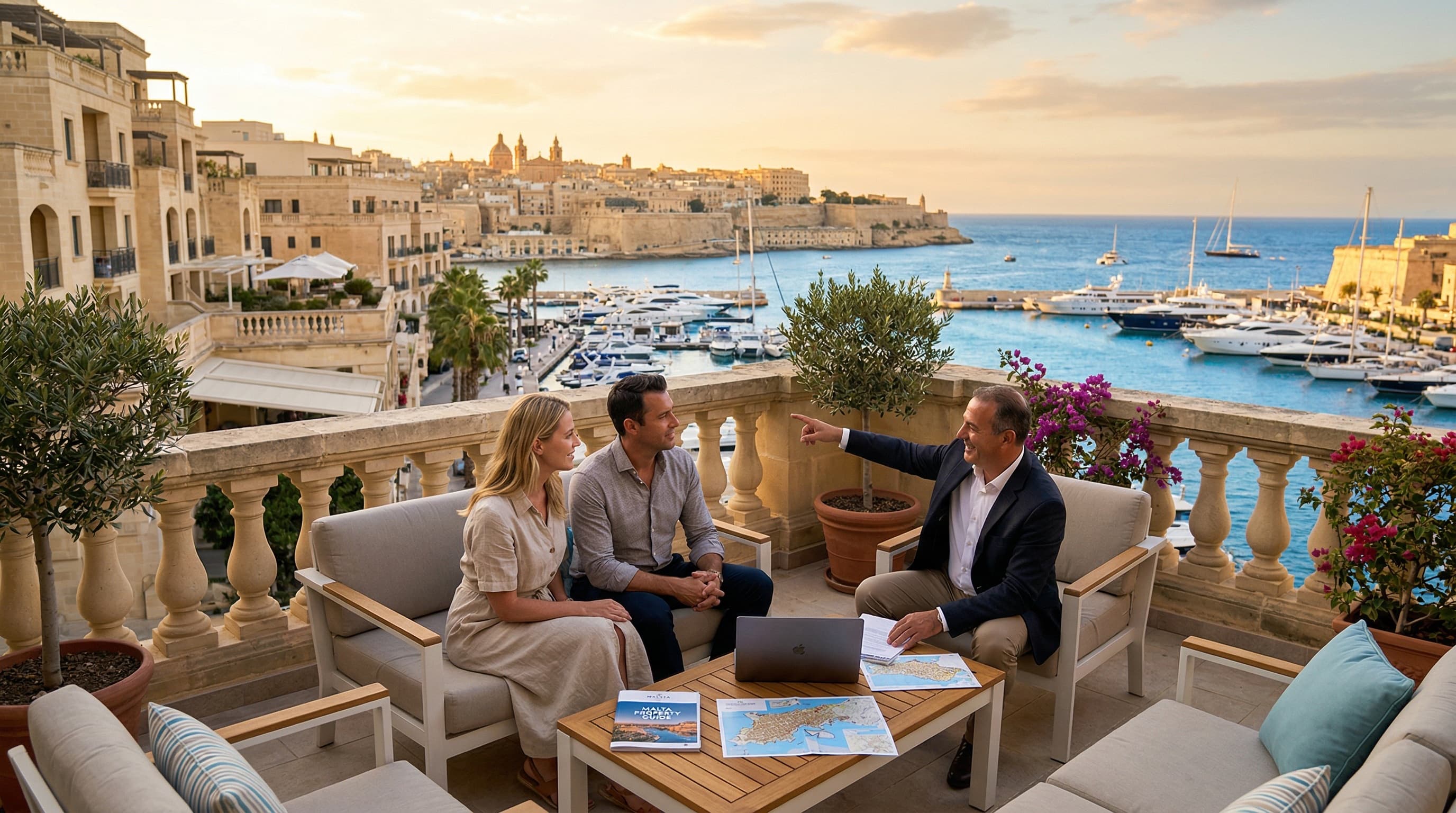
Work with a licensed estate agent to identify suitable properties. Having a local agent who understands the SDA rules and AIP requirements is invaluable.
5.22. Make an Offer and Sign a Promise of Sale (Konvenju)#
Once your offer is accepted, both parties sign a preliminary agreement (konvenju). At this stage, the buyer typically pays a deposit of 10% of the purchase price. The agreement is subject to due diligence and any AIP permit requirements.
5.33. Apply for the AIP Permit (If Required)#
For properties outside SDAs, you must obtain the AIP permit before finalizing the purchase. Processing typically takes 6 to 12 weeks.
5.44. Complete Due Diligence#
Your notary will verify the property's legal title, check for any encumbrances, and ensure all planning permissions are in order.
5.55. Sign the Final Deed#
The final deed is signed before a notary public. The remaining purchase price is paid, and ownership is transferred.
6Taxes and Costs#
Property transactions in Malta involve several costs:
- Stamp duty: 5% on most purchases (2% for Gozo, 2.5% for Urban Conservation Areas)
- Notary fees: typically 1% to 3% of the purchase price
- Property tax: 8% final withholding tax on the sale price for the seller (5% for restored UCA properties)
First-time buyers benefit from a stamp duty exemption on the first 200,000 euros of property value, which significantly reduces acquisition costs.
7Malta Permanent Residence Programme (MPRP)#
For non-EU nationals, the MPRP offers a pathway to permanent residence through property investment. Key requirements include:
- Minimum property purchase of 375,000 euros (or minimum annual rent of 14,000 euros)
- Qualifying assets of 500,000 euros (including 150,000 euros in financial assets) or 650,000 euros with 75,000 euros in financial assets
- Government contribution of approximately 60,000 euros in fees
- Property must be held throughout the residency period
The MPRP was significantly reformed in 2024-2025, removing regional distinctions between Malta and Gozo and strengthening regulatory oversight. A new one-year temporary residence permit is now available while applications are processed.
8Key Takeaways#
- Foreign buyers are limited to one owner-occupied property outside SDAs
- Special Designated Areas offer freedom to buy and rent without restriction
- The AIP permit is required for non-SDA purchases
- First-time buyer stamp duty exemptions can save thousands
- The MPRP provides a clear residency pathway for non-EU investors