
First-Time Buyer's Guide to Malta: Everything You Need to Know Before Purchasing
A comprehensive step-by-step guide for first-time property buyers in Malta. Learn about mortgages, the Konveniu process, stamp duty, due diligence, and tips for a smooth purchase.
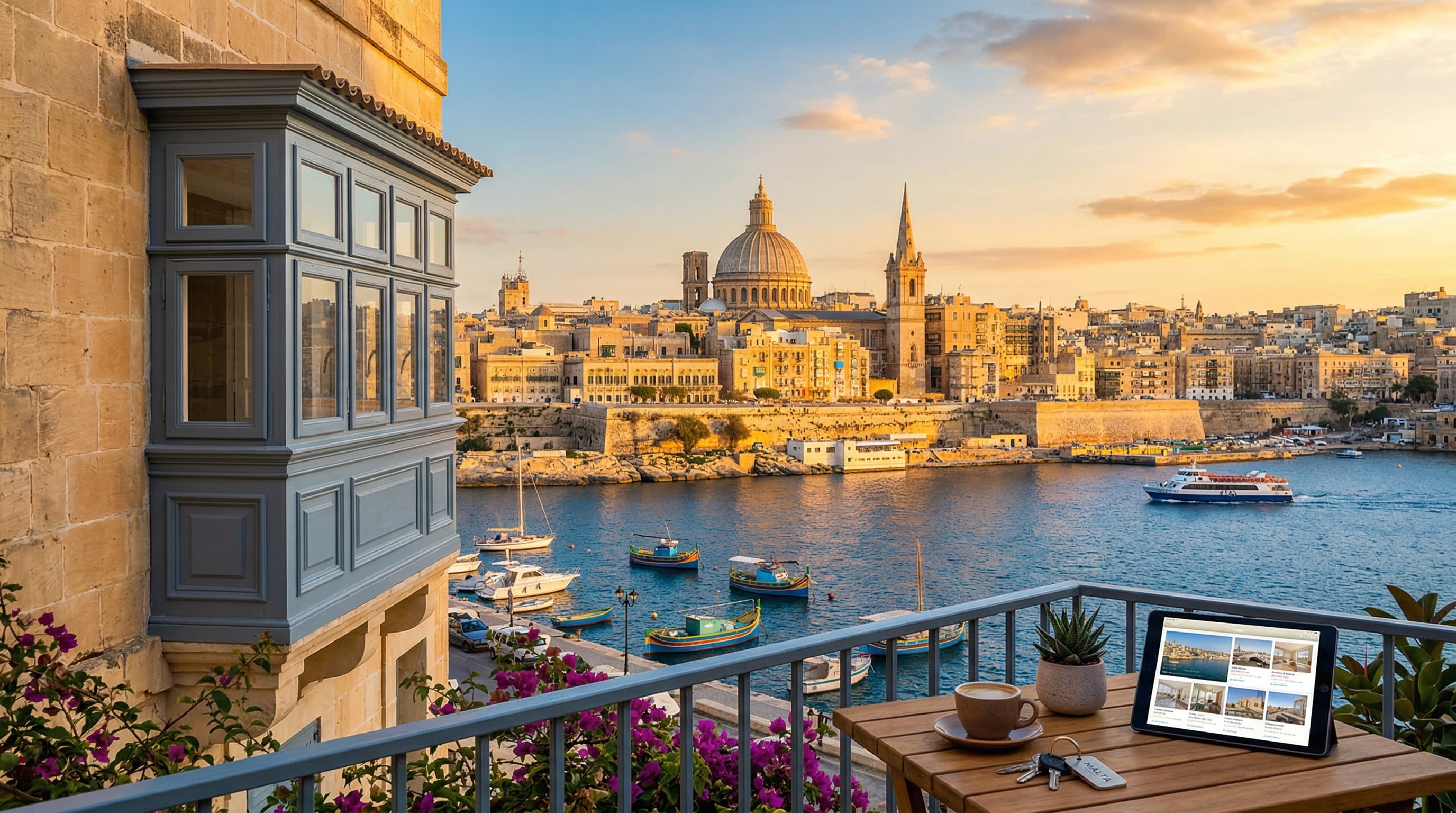
1Introduction: Buying Your First Property in Malta#
Purchasing your first property is one of the most significant financial decisions you will make. In Malta, the process has its own unique characteristics, from the Promise of Sale (Konveniu) system to stamp duty structures and bank lending practices. This comprehensive guide walks you through every step of buying your first home in Malta.
2Step 1: Assess Your Budget and Get Pre-Approved#
Before you start viewing properties, you need to understand how much you can afford. This involves looking at your savings, your income, and what banks are willing to lend you.
2.1How Much Can You Borrow in Malta#
Maltese banks typically lend up to 80% of the property's value (the Loan-to-Value ratio, or LTV). Some banks may offer up to 90% LTV for first-time buyers, subject to conditions. The maximum loan term is usually 40 years, and the loan must be repaid before you turn 65 (or 70 in some cases).
2.2Monthly Repayment Considerations#
A general rule is that your monthly mortgage repayment should not exceed 30% to 40% of your net household income. For example, if you earn €2,500 net per month, expect a maximum monthly repayment of €750 to €1,000.
2.3Getting Pre-Approved#
Contact several banks to compare mortgage offers. Getting a pre-approval letter is highly recommended as it shows sellers you are a serious buyer and gives you clarity on your budget. Major banks in Malta include Bank of Valletta, HSBC Malta, APS Bank, and BNF Bank.
3Step 2: Search for the Right Property#
With your budget defined, you can begin your property search. Use platforms like Key Malta to filter properties by type, location, price, and features. Consider the following factors when searching.
3.1Location Priorities#
Think about your daily commute, proximity to schools (if relevant), access to amenities, and the general atmosphere of the neighbourhood. Malta's traffic can be challenging, so living close to your workplace can significantly improve your quality of life.
3.2Property Type#
Malta offers several property types, each suited to different lifestyles. Apartments are the most common and affordable option. Maisonettes provide a house-like feel with a lower price tag. Terraced houses and townhouses offer more space, while villas are at the premium end. Each comes with different maintenance responsibilities and community dynamics.
3.3New Build vs Resale#
New-build properties often come with modern finishes, energy efficiency certificates, and developer warranties. Resale properties may offer more character, established neighbourhoods, and the ability to negotiate on price. Consider the cost of any renovations if buying a resale property.
4Step 3: Make an Offer and Sign the Konveniu#
Once you have found the right property, it is time to make an offer. In Malta, negotiations typically happen through the estate agent or directly with the owner if it is a Direct-to-Owner listing.
4.1The Promise of Sale (Konveniu)#
The Konveniu is a legally binding preliminary agreement between buyer and seller. It is one of the most important documents in the Maltese property buying process.
4.1.1What the Konveniu Includes#
- The agreed purchase price
- A deposit of 10% of the purchase price (paid by the buyer)
- Payment of 1% provisional stamp duty
- A deadline for the Final Deed (typically 3 to 6 months)
- Any conditions, such as obtaining a bank loan or planning approvals
- Penalties for either party if they withdraw
4.2Choosing a Notary#
The notary plays a central role in Maltese property transactions. They conduct due diligence, verify the property title, check for outstanding debts or liens, and prepare the legal documents. You can choose your own notary — this is your right, and it is recommended to select one you trust.
5Step 4: Due Diligence and Bank Valuation#
After signing the Konveniu, several important checks take place during the interim period.
5.1Property Searches#
Your notary will conduct property searches at the Public Registry (Land Registry) to verify ownership history, check for any encumbrances, hypothecs (mortgages), or pending legal issues. This is a critical step that protects your investment.
5.2Bank Valuation#
If you are taking a mortgage, your bank will commission an independent valuation of the property. The bank will lend based on the valuation figure, not necessarily the purchase price. If the valuation comes in lower than the agreed price, you may need to cover the difference from your own funds.
5.3Architect's Report#
While not mandatory, commissioning an architect's report (also called a structural survey) is highly recommended. The architect will inspect the property for structural issues, damp problems, illegal additions, and compliance with building regulations. This typically costs €300 to €600 and can save you from expensive surprises.
6Step 5: The Final Deed#
The Final Deed (Att Finali) is the moment ownership officially transfers from seller to buyer. This takes place at the notary's office and involves several key actions.
6.1What Happens at the Final Deed#
- The remaining 90% of the purchase price is paid (typically via bank transfer or banker's draft)
- The remaining 4% stamp duty is paid (total stamp duty is 5%)
- The notary reads the deed in full
- Both parties sign the deed
- The notary registers the deed at the Public Registry
6.2First-Time Buyer Stamp Duty Relief#
First-time buyers in Malta may benefit from reduced stamp duty rates. The government periodically updates these schemes, so check the latest measures with your notary or on the Malta Revenue and Customs website.
7Step 6: After the Purchase#
Congratulations on your new home. Here is what to do next.
7.1Transfer Utilities#
Contact ARMS (Automated Revenue Management Services) to transfer the electricity and water meters to your name. This should be done as soon as possible after the Final Deed.
7.2Home Insurance#
While not legally required (unless mandated by your mortgage lender), home insurance is strongly recommended. It covers structural damage, contents, and third-party liability. Annual premiums typically range from €200 to €600 depending on the property value and coverage.
7.3EPC Certificate#
All properties in Malta require an Energy Performance Certificate (EPC). If you are buying a new build, the developer should provide this. For resale properties, the seller is required to provide an EPC before the sale is completed.
8Common Mistakes First-Time Buyers Make#
Avoid these pitfalls to ensure a smooth purchasing experience.
- Not getting pre-approved before viewing properties, which leads to disappointment when budgets do not align
- Skipping the architect's report to save money, only to discover expensive structural issues later
- Not factoring in all costs beyond the purchase price, including stamp duty, notary fees, and moving costs
- Rushing the decision due to market pressure without thoroughly checking the property and neighbourhood
- Not reading the Konveniu carefully or understanding the penalty clauses
9Conclusion#
Buying your first home in Malta is an exciting milestone. By understanding the process, getting professional advice, and using tools like Key Malta to search for properties, you can navigate the journey with confidence. Take your time, do your research, and soon you will have the keys to your new Maltese home.