Renovating Property in Malta: Permits, Costs, and What to Expect
A practical guide to property renovation in Malta, covering planning permits, typical costs, limestone restoration, and how to navigate the unique challenges of upgrading Maltese properties.
1Why Renovation Is Popular in Malta#
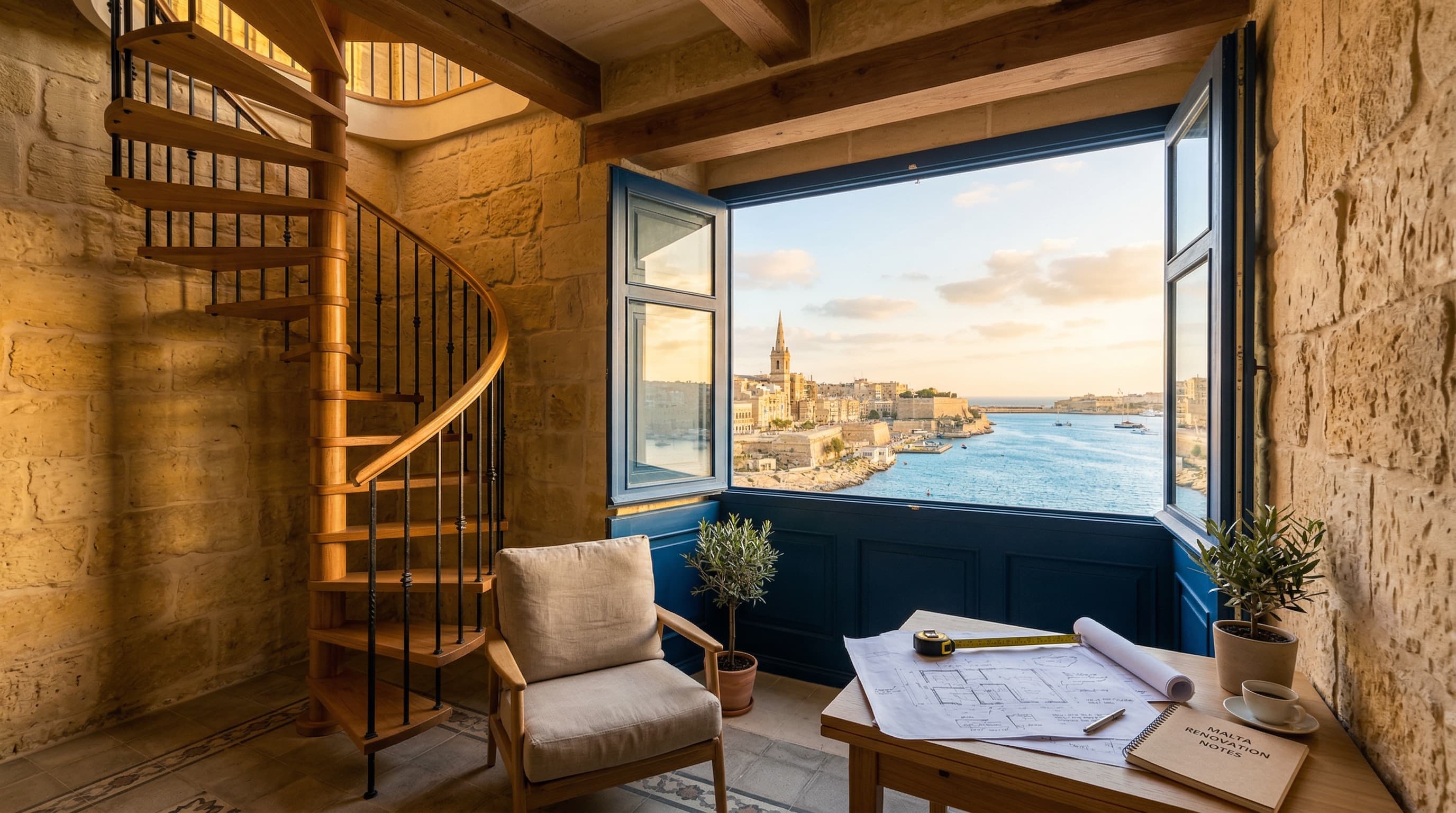
With a limited land supply and a rich architectural heritage, property renovation in Malta is not just an option but often a necessity. Many of Malta's most characterful homes, from townhouses in the Three Cities to farmhouses in Gozo, require modernisation to meet contemporary living standards.
Renovation can also be financially attractive. Buying a property that needs work and investing in a thoughtful renovation can result in a home worth significantly more than the combined cost of purchase and works.
2Planning Permits and Regulations#
Before starting any renovation work in Malta, it is essential to understand the planning framework:
2.1When You Need a Permit#
A full development permit from the Planning Authority (PA) is required for:
- Any external alterations visible from the street
- Changes to the building footprint or height
- Converting a property from one use to another (e.g., garage to living space)
- Any work on properties in Urban Conservation Areas or scheduled buildings
2.2When You May Not Need a Permit#
Minor internal works that do not affect the structure or external appearance may fall under the Development Notification Order (DNO), which is a simpler and faster process. Examples include:
- Internal re-plastering and painting
- Replacing kitchen and bathroom fittings
- Installing new flooring
- Upgrading electrical and plumbing systems
Always check with a licensed architect before assuming your work does not require planning permission.
3Typical Renovation Costs#
Renovation costs in Malta vary significantly based on the property type, condition, and scope of work:
- Basic cosmetic renovation: 300 to 500 euros per square metre
- Mid-range renovation with new kitchen and bathrooms: 600 to 1,000 euros per square metre
- High-end renovation with premium finishes: 1,200 to 2,000 euros per square metre
- Full structural restoration of a historic property: 1,500 to 3,000 euros per square metre
These figures include materials and labour but exclude professional fees (architect, engineer) which typically add 8% to 15% of the construction cost.
4Working with Limestone#
Malta's traditional building material is globigerina limestone, a soft golden stone that gives the islands their distinctive appearance. Working with limestone requires specific knowledge:
- Limestone walls breathe and should not be sealed with cement-based renders
- Rising damp is best treated with lime-based plasters, not waterproof membranes
- Original features like stone arches, niches, and corbels can be restored rather than replaced
- New limestone can be sourced from active quarries in Malta and Gozo
5Common Renovation Challenges#
5.1Access and Logistics#
Many of Malta's older properties are in narrow streets where large vehicles cannot access. This affects material delivery, waste removal, and the use of heavy machinery. Budget extra time and cost for properties in historic cores.
5.2Discovering Hidden Problems#
Older properties can reveal surprises once work begins: unstable foundations, outdated wiring, asbestos in older additions, or undocumented modifications from previous owners. A contingency budget of 15% to 20% is advisable.
5.3Finding Skilled Tradespeople#
Demand for skilled construction workers in Malta consistently exceeds supply. Finding reliable plumbers, electricians, and stone masons can be challenging. Start sourcing tradespeople well before your planned start date.
5.4Neighbour Relations#
In Malta's dense urban environment, renovation work directly affects neighbours. Construction noise is regulated, and certain works require party wall agreements. Maintaining good relations with neighbours throughout the process is both legally important and practical.
6Tax Incentives for Renovation#
Malta offers several tax benefits for property renovation:
- Reduced stamp duty (3.5% instead of 5%) for properties in Urban Conservation Areas
- VAT exemption on certain restoration works for residential properties
- Potential energy efficiency grants for solar panels, insulation, and double glazing
7Tips for a Successful Renovation#
1. Hire a licensed architect from the start, even for minor works 2. Get at least three quotes for all major works 3. Agree on a fixed-price contract with a clear scope and timeline 4. Make all payments against invoices and receipts 5. Visit the site regularly to monitor progress 6. Keep a contingency budget of at least 15% 7. Do not rush: quality renovation in Malta takes time
Renovating property in Malta can be deeply rewarding, transforming a tired building into a beautiful home while preserving the island's architectural heritage. With proper planning, realistic budgeting, and the right professionals, the process can be smoother than many buyers fear.